
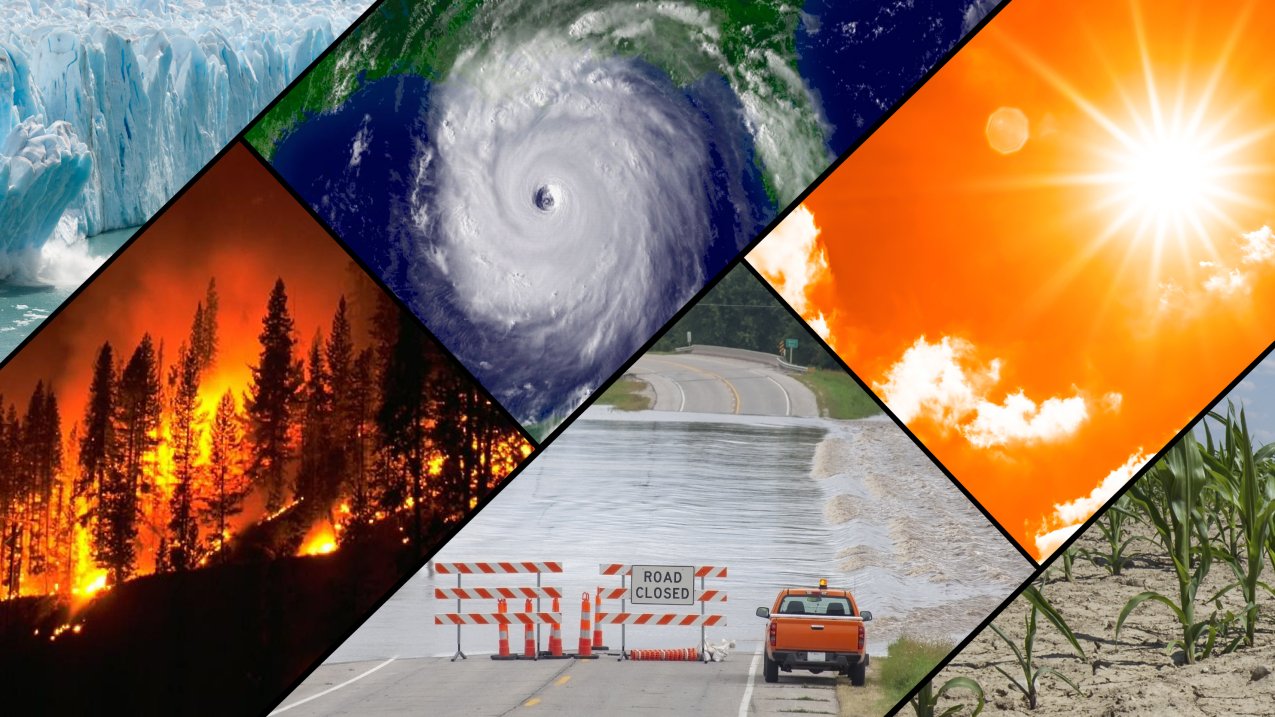
The health of people is fundamentally threatened by climate change. It impacts the physical environment and every facet of human and natural systems, including social and economic circumstances and the operation of health care systems. These climate and weather risks directly and indirectly impact health, raising the risk of non-communicable diseases, infectious disease onset and transmission, fatalities, and medical emergencies. The effects and severity of climate change can still be mitigated. Many of the issues and solutions are already known to us, but researchers are continuously discovering new ones. Experts say that by cutting emissions to zero as soon as possible, we can limit warming offsite link and prevent the worst results. We will need to make investments in new infrastructure and technology to achieve this aim, which will create jobs.
Causes and Effects of Climate Change
Fossil fuels like coal, oil, and gas are responsible for more than 75% of global greenhouse gas emissions and almost 90% of all carbon dioxide emissions, making them by far the biggest cause of climate change. As temperatures continue to rise, weather patterns are shifting, and the natural equilibrium is being upset. All life on Earth, including humans, is at serious risk from this.
Causes of climate change
- Generating Power
One primary source of global emissions is the combustion of fossil fuels to generate heat and power. The majority of power is still produced by burning coal, oil, or gas, which releases dangerous greenhouse gases like carbon dioxide and nitrous oxide that cover the planet and retain heat from the sun. Compared to fossil fuels, renewable energy sources like wind, solar, and others release little to no greenhouse gases or other pollutants into the atmosphere.
- Manufacturing Goods
The primary source of emissions from manufacturing and industry is the burning of fossil fuels to generate energy. Additionally, the construction industry releases gases, as do mining and other industrial processes. Typically, industrial machines are powered by coal, oil, or gas. Certain products, such as plastics, are manufactured using chemicals derived from fossil fuels. Globally, the manufacturing sector is one of the most significant sources of greenhouse gas emissions.
- Cutting Down Forests
When forests are cut down to make way for farms, pastures, or other purposes, the carbon that the trees have been storing is released, which results in emissions. Roughly 12 million hectares of forest are lost every year.
- Using Transportation
Fossil fuels power most automobiles, trucks, ships, and aircraft. Thus, transportation is a significant source of greenhouse gases, particularly carbon dioxide emissions. However, ship and aircraft emissions are still rising. Transportation is responsible for around 25% of carbon dioxide emissions related to energy worldwide.
- Producing Food
Food production generates carbon dioxide, methane, and other greenhouse gas emissions in many ways, including the creation and use of fertilizers and manure for crop growth and the energy consumption of farming machinery and fishing vessels, which are typically powered by fossil fuels. Food production is, therefore, a significant factor in climate change.
- Powering Buildings
Growing energy demand for heating and cooling, rising air-conditioner ownership, and increased electricity consumption for lighting, appliances, and connected devices have contributed to a rise in energy-related carbon dioxide emissions from buildings in recent years.
Effects of Climate Change
- Hotter Temperatures
The global surface temperature increases as greenhouse gas concentrations do. 2011–2020 was the warmest decade on record. Since the 1980s, the temperature has increased every decade. There are more hot days and heat waves in almost every location. Warmer temperatures make it harder to work outside and raise the risk of heat-related illnesses. Hot weather makes it easier for wildfires to ignite and accelerates their spread.
- More Severe Storms
In many areas, destructive storms have increased in frequency and intensity. As temperatures rise, more moisture evaporates, intensifying flooding, heavy rainfall, and deadly storms. The warming ocean also impacts tropical storm frequency and intensity. Homes and towns are frequently destroyed by such storms, which also result in fatalities and significant financial losses.
- Increased Drought
Global warming worsens agricultural droughts that impact crops and ecological droughts that enhance ecosystem fragility. It also makes water shortages worse in areas already under water stress. Droughts have the power to trigger catastrophic dust and sand storms that can transport billions of tons of sand over continents. As deserts grow, less area is available for food production. The risk of not getting enough water regularly is now a concern for many individuals.
- A warming, Rising Ocean
The ocean absorbs most of the heat caused by global warming. In all ocean depths, the rate of ocean warming has significantly increased over the last 20 years. Water expands with increasing temperature, so the ocean’s volume grows as it warms. Additionally, when ice sheets melt, sea levels rise, endangering island and coastal communities. However, increased ocean acidity due to carbon dioxide puts coral reefs and marine life at risk.
- Loss of Species
Climate change is threatening the survival of terrestrial and marine species. As temperatures rise, so do these dangers. The rate of species extinction is 1,000 times higher than it has ever been in recorded human history, and this trend is being exacerbated by climate change. Within the next several decades, one million species could go extinct.
- Not Enough Food
Hunger and malnutrition are on the rise worldwide, and some of the causes are climate change and an increase in extreme weather occurrences. Crops, cattle, and fisheries might all be destroyed or become less productive. Ocean acidification threatens marine resources that sustain billions of people. Reduced water and grasslands for grazing due to heat stress can impact animals and result in decreased agricultural production.
- Effects of Climate Change on Humans
The effects of climate change on weather, the environment, animals, and agriculture ultimately have an impact on people. There is more, though. Throughout the world, our lifestyles—from the businesses that support our economy to the methods by which we obtain our food—have evolved in the setting of comparatively stable weather. Global warming has the potential to change society as a whole as it upends this base. In the worst-case scenario, this could result in widespread starvation, illness, conflict, injury, and death. Many people throughout the world already live with this bleak prediction. Climate change thus threatens the existence of all human life.
- Climate Change and Equity
The impacts of climate change on health in the short to medium term will primarily depend on how vulnerable populations are, how resilient they are to the current rate of change, and how quickly and extensively adaptation occurs. In the long run, the consequences will rely more and more on how much transformative action is taken now to cut emissions and prevent them from exceeding potentially irreversible tipping points and severe temperature thresholds.
- Displacement
Climate change will cause displacement due to effects including food and water shortages, rising sea levels, and unstable economies. This is already taking place. According to the UN Global Compact on Refugees, “disasters, environmental degradation, and climate change are increasingly interacting with the drivers of refugee movements.”
- Effects of climate Change on the weather
Global warming causes extensive changes in weather patterns, increasing the severity and unpredictability of natural disasters, including hurricanes, floods, and droughts. In our time, extreme weather events that may have only occurred once in the lives of our grandparents are happening more frequently. However, not all locations will see the same consequences: Climate change may increase the likelihood of floods in certain areas while causing severe drought in others.
- Higher Average Temperatures
Due to this seemingly insignificant but significant increase in the global average temperature, we are expected to see more intense heat waves every summer. Even local news forecasters are beginning to link streaks of record-breaking days to new long-term patterns, which are particularly troublesome in areas where housing and infrastructure were not designed to withstand rising temperatures.
- Effects of Climate Change on the Environment
Climate warming is upsetting ecosystems everywhere, from the tropics to the Arctic. Even a seemingly small change in temperature can cause significant alterations in ecology and food webs.
- Melting Sea Ice
The coldest parts of the Earth, the poles, are where the effects of climate change are most noticeable. Because the Arctic is warming twice as quickly as the rest of the planet, polar ice sheets and glaciers that store a vast amount of water are melting quickly. When sea ice melts, darker ocean waters that receive more sunlight are exposed, accelerating the melting process through a positive feedback loop.
- Flooding
Along with coastal flooding induced by rising sea levels, climate change also impacts snowmelt and heavy precipitation, which leads to inland and urban flooding. Due to extreme weather and sea level rise exacerbated by global warming, our country’s floodplains are anticipated to increase by approximately 45% by 2100. Intense rainfall combined with melting glaciers and snow caused disastrous flooding in 2022 that inundated up to a third of Pakistan.
- Economic Impacts
According to the 2018 National Climate Assessment, the U.S. economy might lose up to $500 billion annually by the end of the century due to climate change if nothing is done. Climate change also has profound effects on human health. Whole regional industries, including commercial fishing, tourism, and husbandry, as well as the financial support they offer, are in danger of going extinct.
The cost of recovering from the devastation caused by extreme weather events like hurricanes, flash floods, and wildfires is also rising annually. The third most expensive year on record, 2021 saw several weather-related incidents worth billions of dollars, with a total cost of $145 billion.
Future Effects of Climate Change
We are already witnessing the first wave of effects on the nightly news and in our neighborhoods. According to the World Health Organization, climate change is predicted to result in an additional 250,000 fatalities annually between 2030 and 2050 from causes such as heat stress, insect-borne illnesses, and starvation. By 2050, the World Bank predicts that over 140 million people in sub-Saharan Africa, South Asia, and Latin America may be displaced within their own countries due to climate change.
Conclusion
Climate change is already a reality that impacts every region of the world, not just a threat from the future. Food insecurity, biodiversity loss, extreme weather, and sea level rise are just a few of the many intricately linked effects. Human activity is primarily responsible for the causes, but it is also responsible for the solutions. All parties—governments, corporations, and individuals—have a responsibility to invest in clean energy, embrace sustainable practices, and lower emissions. For the sake of future generations as well as the health of the Earth, we must act quickly and cooperatively to combat climate change. It’s time to take action.
Frequently asked questions
What is the impact of climate change on the world?
Climate change impacts the environment in various ways, such as increased temperatures, sea level rise, drought, and flooding.
Who is most affected by climate change?
Adults 65 years of age and older are the most frequently reported victims of heat-related deaths. Occupational groups that are exposed to climate change dangers more regularly or for longer periods include first responders and construction workers. For instance, outdoor workers are most impacted by intense heat and disease-carrying insects and ticks.
How does climate affect soil?
Even though the weather is a transient aspect of climate, soil can nevertheless be impacted by specific weather cycles. For instance, in windy or droughty conditions, soil might be dried out and redistributed. Plants grow less when the soil dries out, which weakens the surface layer’s stability and increases erosion.
How does climate change affect land?
Furthermore, land degradation is exacerbated by extreme weather events brought on by global warming, such as more prolonged and severe droughts, greater rainfall that causes floods and landslides, and more frequent and powerful tropical storms.