
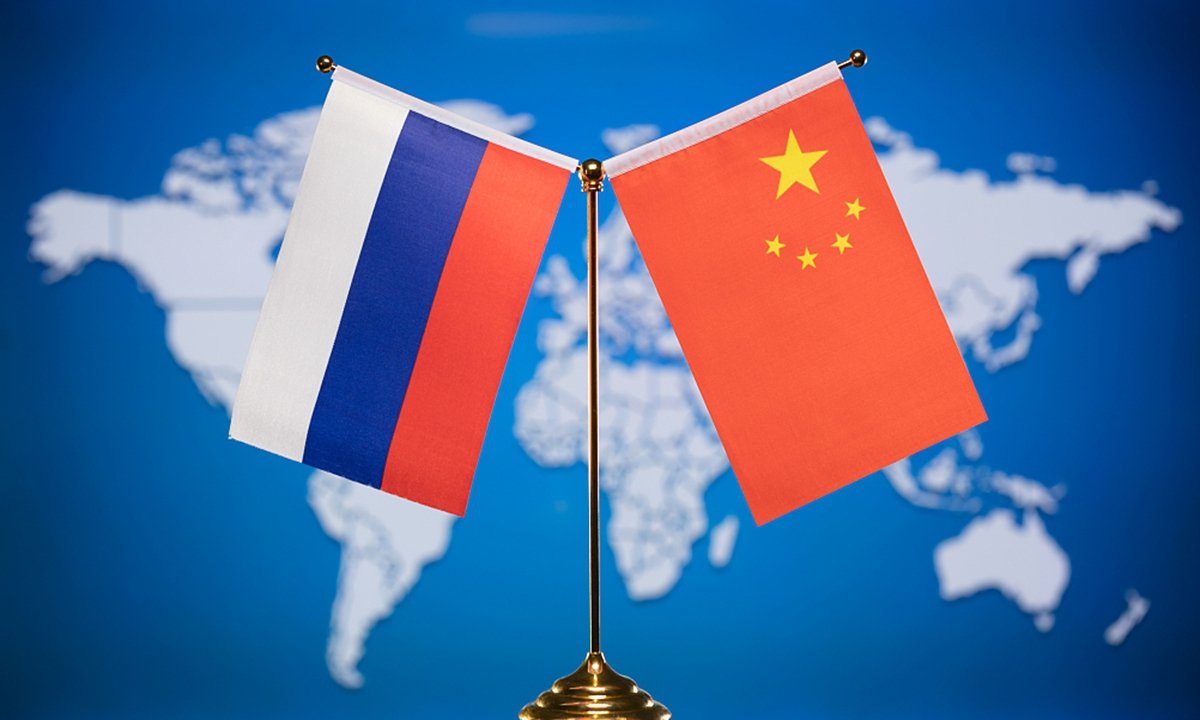
The widening divide between the US, UK, France, and other Western nations and the Cold War allies, China and Russia, has recently tightened their stances on the Gaza crisis. China’s foreign minister declared over the weekend that Israel “should stop collective punishment of the people of Gaza because its bombing campaign had gone beyond the scope of self-defense. Israel’s heightened siege of Gaza might mimic the German soldiers’ siege of Leningrad during World War II, which Russian President Vladimir Putin brought up on Friday. This connection is sure to provoke great offense in Israel. Before Putin’s anticipated visit, Russia’s top diplomat. This will cause Western nations to be alarmed by the two countries’ tight ties.
Similar to how the USSR supported the Palestinian cause during the Cold War, China has long supported the cause. Lately, both nations have attempted to strike a balance between deepening their relations with Israel and their larger diplomatic endeavors to gain allies in the Arab world and elsewhere.
Russia and China on Gaza
Russia’s partnership with Iran, Hezbollah, and Syria’s Bashar al-Assad has helped it win a kind of civil war in Syria. It has also used the triumph as a platform to increase its dominance in the eastern Mediterranean and as an advertisement to boost Russian arms sales. Then came shipments of weapons to Saudi Arabia and Egypt. Russia increased its sway over Libya, partnered with Riyadh to control OPEC+, and even strengthened its relationship with Israel. Whose prime minister, Benjamin Netanyahu, has boasted about his friendship with President Vladimir Putin.
China and Russia fail to condemn Israeli attacks.
There was an expectation that Russia and China would formally condemn the attacks on Iran, given the extensive promotion of strategic relations between Tehran, Moscow, and Beijing in recent years. The newspaper wrote: “Three days passed after the Israeli military attack on sites in three Iranian provinces before China’s foreign ministry responded. The Russian foreign ministry spokesperson also commented on the attack only hours afterwards. In the end, neither Beijing nor Moscow condemned Israel’s actions.” The response from China and Russia to Israel’s attacks on Iran has been widely criticized, with many people viewing it as inadequate and delayed.
Calls for direct military action against Israel
According to a journal allied with Iran’s so-called “hardliners,” direct military action against Israel is necessary to maintain regional security. Agaah has previously called for taking direct action against Israel. The Daily published a list of prospective targets for Hezbollah’s drones and missiles last month. Food factories, power plants, technological plants, and chemical production facilities were on the list.
Internal conflicts hamper Iran’s diplomacy.
The government’s treatment of “extremist” groups in Iran has drawn criticism from the former head of the National Security and Foreign Policy Commission of the Iranian parliament, who claims that these actions are hurting diplomatic attempts. When diplomacy represents a united and powerful voice within a nation, it is recognized and trusted internationally. Thus, “Mr. Pezeshkian’s government must address these issues first,” he stated, adding that “the main barriers to diplomacy here are internal.”
Chinese narratives on the Israel-Hamas war
However, the Israel-Hamas battle has not sparked a significant public response in China, even though over ten Chinese citizens have been killed, injured, or reported missing as a result of the crisis. China tries to present itself as a supporter of peace and to show that it agrees with many non-Western states in supporting the Palestinian cause. Still hesitant to play a significant role in the ongoing conflict, according to a close analysis of Beijing’s official statements and actions, state media commentary, and social media narratives surrounding the Israel-Hamas war.
Russia: Seeking Advantage, Distracting from Ukraine
Russia appeared to be unprepared for the October 7 terrorist strike on Israel by Hamas. However, it quickly recovered its sangfroid after seeing a chance to take advantage of the Gaza War. Launching a barrage of condemnation against Israel’s offensive in Gaza was not morally hindered by Moscow’s approach in Ukraine, which explicitly targets civilians and civilian infrastructure. The Israeli bombing operation violated international law, according to Foreign Minister Sergei Lavrov. According to President Putin, the siege of Gaza by Israel is similar to the siege of Leningrad by Nazi Germany. Numerous other politicians and Kremlin hangers-on offered their opinions, none of which were in favor of Israel. Not a single person condemned the Hamas strike.
China Appearing Responsible
China has adopted a more conventional diplomatic stance, sticking to safe, conventional terminology and advocating. In October, Beijing dispatched an ambassador to the area to discuss the situation, emphasizing the need for a rapid ceasefire. Foreign Minister Wang Yi hosted a group of Arab and Islamic foreign ministers who were on a tour to the capitals of the five permanent members of the UN Security Council (UNSC) in November. As a “good friend and brother of Arab and Muslim countries,” Wang used the occasion to emphasize that China has “always firmly supported the just cause of the Palestinian people to restore their legitimate national rights and interests.”
Moscow and Beijing Lack Influence
Both Beijing and Moscow have failed to play this kind of diplomatic role. That could help end the current violence or pave the way for a political future that could result in a final resolution of the Palestine-Israel conflict, despite their well-publicized attempts to win over Arab governments and public opinion and to enhance their international reputations at Washington’s expense.
Do Moscow and Beijing’s Influence Work?
However, this does not imply that US diplomacy to achieve a truce in Gaza and a “political horizon” that leads to a two-state solution has enhanced America’s reputation or given it a distinct edge over its competing major powers. In fact, despite growing casualties and evidence of startling Israeli indifference to Palestinian deaths, Washington’s steadfast support for Israel’s Gaza campaign and its vetoes of Security Council resolutions have seriously harmed America’s already precarious position in the region.
How do China and Russia differ in terms of tensions?
Russia and China have different perspectives on the potential conflict between Israel and Hezbollah because of their respective political and economic agendas. Although both nations can create cooperative peace initiatives on the ongoing Middle East conflicts and are typically partners against the Western bloc, the Russian analyst notes.
Impact on the Ukraine conflict
According to Markov, a potential conflict between Israel and Hezbollah would also shift significant Western political resources from Ukraine to Israel. Analysts claim that Moscow’s war campaign against Ukraine has already benefited from the Gaza conflict, diverting Kiev’s Western backers.
While the Western alliance denounced the Russian attack on Ukraine as an act against international law, many activists throughout the world have viewed the US and its allies’ disregard for civilian casualties brought on by Israel’s murderous war behavior as disingenuous.
Support for Palestine
Despite Russia’s harsh criticism, China has mostly refrained from criticizing the United States. This is in contrast to the early stages of the conflict in Ukraine when China’s backing of Russia brought unwanted attention to its diplomatic stance. Through the provision of Iranian drones and support for Syrian President Bashar al-Assad, Russia has also been strengthening its ties with Iran. In the conflict between Israel and Hamas, China and Russia have taken a cautious stance. Both have their foreign policies to think about, as well as complicated connections with Israel and Palestine. Russia and China both have a history of supporting the Palestinians and are upset about what they see to be the US’s marginalization of them.
Conclusion:
Even though Russian and Chinese diplomacy toward Gaza has been ineffective thus far, the situation on the ground has highlighted the main points of both countries: that the United States has once again demonstrated its animosity toward Palestinian aspirations as well as the priorities and viewpoints of Arab and Islamic countries by defending Israel at all costs, in the UN, and with a limitless supply of weapons, ammunition, and money. Even though Washington vehemently denies any such criticism, the fact remains that the longer Israel’s war continues and the number of Palestinians killed rises, the less evidence there is that Israel is ready to put an end to the conflict and commit to a future Palestinian state.
Frequently asked questions
What is China’s response to Gaza?
China condemns the annexation of Gaza and the West Bank, as well as the forcible expulsion of Palestinians. President, peace and stability are in jeopardy as tensions continue to rise elsewhere in the Middle East.
What country is helping Gaza?
Israel has made it easier for humanitarian aid to enter the Gaza Strip through the Rafah crossing between Egypt and the Gaza Strip since October 21, 2023.
Why did Israel give up Gaza?
Israeli officials, historians, and legal experts listed many reasons for the country’s decision to leave the region; the two most important ones were demographic concerns and the unaffordable cost of ongoing, intense combat with Hamas and other Palestinian militant groups.
Can tourists visit Gaza?
Because of the armed war and terrorism, avoid traveling to Gaza. Because of Israel’s ongoing military presence and activities, northern Israel is located within 4 kilometers/2.4 miles of the borders with Lebanon and Syria.
Are there Muslims in the Israeli army?
Approximately 12% of Israeli Arabs are Bedouins, a Muslim minority who identify more as Israelis than other Arab Israeli residents. The Israel Defense Forces has a large Negev Bedouin population.