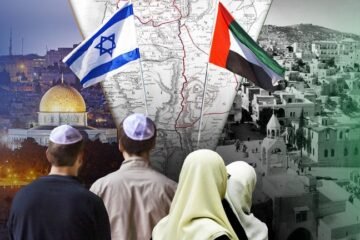
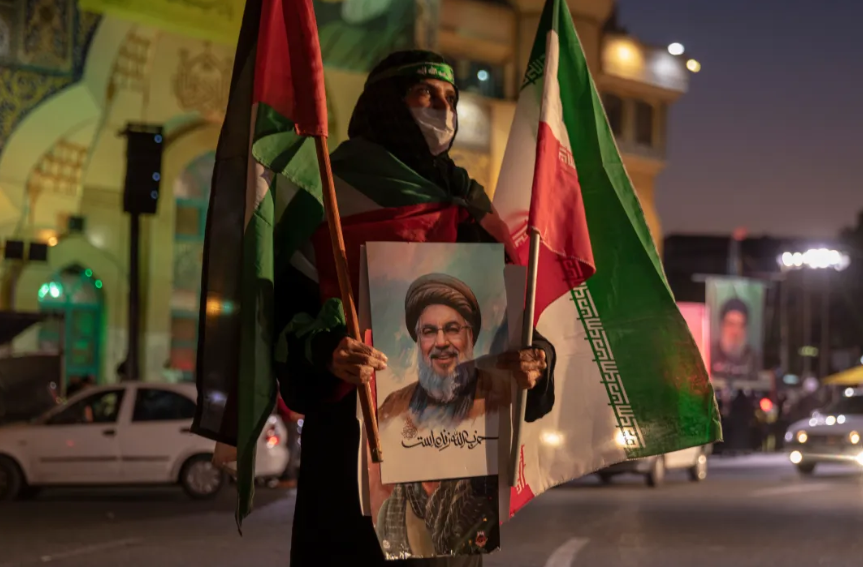
The threat of a regional war in the Middle East has increased as the confrontation between Israel and Hezbollah enters a risky new stage. Hezbollah’s growing role in the Israel-Hamas conflict and the 2024 assassination of Hamas leader Ismail Haniyeh have been significant factors in this escalation, which has its roots in longstanding regional power conflicts. Israel’s recent death of Hassan Nasrallah, the longtime leader of Hezbollah, has further escalated the confrontation and signaled a hazardous turn. Fears of an impending wider conflict are heightened by Hezbollah’s vow to keep up its battle against Israel in the face of regional censure.
An all-out conflict is not inevitable, even though the risk is increasing. Israeli strikes have the potential to either significantly impair Hezbollah’s ability to attack Israel or successfully pressure the group to agree to a truce and withdraw its soldiers from the border.
Conflict in the Middle East is Spreading:
The Middle East conflict seems to be getting worse over a year after Hamas attacked Israel. Israeli sources reported that Israel’s air defenses tried to block the incoming fire after Iran launched a significant missile strike that targeted locations throughout Israel. Iran has claimed that the missile strike was a reaction to the killing of Hassan Nasrallah, the leader of Hezbollah, according to Hadeel Al-Shalchi and Greg Myre of NPR. The Israeli airstrike killed 39 people in Beirut on Friday, including Nasrallah, Lebanese health officials said.
Iran’s Strategy
Even though Hassan Nasrallah, the head of Hezbollah, was assassinated, McKenzie argues this will probably not be good for Iran when they launched their final onslaught on Israel in April. Things did not go well for them. As a result, Iranians may believe they must act immediately. Any action you take must have a significant impact. Therefore, you must proceed with extreme caution. If it doesn’t significantly impact you, you will end up in worse shape than when you started.
Hezbollah’s Defeat and Iran’s Strategic Depth Doctrine:
Iran suffered several devastating setbacks in 2024 that hindered its attempts to increase its strategic depth in the Middle East. The Islamic Republic has long supported Hamas in the Gaza Strip and Hezbollah in Lebanon. Starting in 2011, it has also stepped in to support Bashar al-Assad in his fight against armed rebel groups in Syria, which was first intended to increase Iran’s influence in the region and evolved into a network of deterrence to prevent Israeli and American strikes on Iranian territory. In response to Israel’s October 2023 invasion of Gaza, Hezbollah fired its volley of missiles across the Lebanese border. Following Iranian policy and in favor of Hamas. This strategy sought to deflect Israeli resources away from the Gaza front and eventually end the conflict. Sayed Hassan Nasrallah was Hezbollah’s secretary general at the time. Stated in September 2024 that the group would not stop fighting until Israel had halted its war on Gaza.
- Hezbollah in Action
Hezbollah was a key component of Iran’s strategic depth before October 7, 2023, conducting operations against Israel by Tehran’s strategic objectives. According to General Soleimani, Hezbollah has proven that it can “bury the Israeli army with its missiles going beyond simple deterrence. Twelve Soleimani was principally responsible for the group’s missile arsenal, which was intended to give it an edge over Israel.
Iran’s Efforts to Salvage Hezbollah’s Reputation:
Although the exact nature of Hezbollah’s connection with Iran is unknown, it is reasonable to believe that the truce was related to Iran’s determination to protect Hezbollah’s surviving forces from Israel’s ceaseless attacks to resupply and restore their capabilities. By crafting a narrative that rejected ideas of the group’s weakness and loss, Iran’s leadership has also attempted to preserve
Israel-Hezbollah Conflict:
Israel-Hezbollah conflict targeting Hamas infrastructure. Israel’s fast and massive military reaction killed important operatives and seriously damaged Gaza’s civilian infrastructure. Now that the battle has reached a turning point. Both sides are steadfast in their stances and unwilling to defuse the situation. Lebanon, which is already dealing with political and economic problems, has suffered a devastating humanitarian cost—Israeli bombings in the south. Lebanon has forced thousands of citizens to flee their homes.
The Assassination of Ismail Haniyeh:
An important turning point in the Israel-Hezbollah conflict was the July 31, 2024, assassination of Ismail Haniyeh in Tehran by Israeli agents. As a longtime leader of the Palestinian resistance, Haniyeh’s murder was interpreted as a direct challenge to Hamas and its supporters in Iran and Hezbollah. The assassination of Hezbollah, which had previously participated in rocket assaults against Israel in support of Hamas, significantly intensified its military operations.
- Hezbollah’s Response and Iran’s Involvement
Hezbollah, led by Hassan Nasrallah, has remained steadfast in its opposition to Israel and has matched its activities with the strategic goals of Iran. Iran sees Hezbollah as a vital component of its larger effort to counter Israeli and American power in the area. Despite Israeli bombings, Hezbollah was able to launch rockets into northern Israel, demonstrating its tenacity and the strong support it has from Tehran.
- The Assassination of Hassan Nasrallah
Hezbollah leader Hassan Nasrallah was murdered in a southern Beirut Israeli airstrike on September 27, 2024. As part of a larger plan to weaken Hezbollah’s leadership, Israel targeted Nasrallah, a longstanding symbol of the group’s hostility to Israel. A broader regional conflict is now more likely after Hezbollah acknowledged his death and pledged to carry on the battle against Israel. Fears of Iranian interference have increased in response to Nasrallah’s assassination. Iran, a major supporter of Hezbollah, denounced the murder and promised to stand by the group. Given Nasrallah’s pivotal role in preserving Hezbollah’s military and ideological unity, this development critically expands the scope of the Israel-Hezbollah war.
- Israel’s Strategic Objectives
To protect its northern cities and villages, Israel’s primary goal in the ongoing fight is to destroy Hezbollah’s rocket and missile capabilities. Precision airstrikes and intelligence-driven operations are now the mainstays of the Israeli military’s strategy, which could have disastrous effects on both Israel and Lebanon. In addition to its immediate military objectives, Israel’s larger strategy aims to stop Iran from increasing its power in Lebanon. Israel’s military actions in Syria and Lebanon are part of a broader attempt to limit. Tehran’s influence and Israeli leaders see Hezbollah as an extension of Iranian dominance in the area. As part of this overall plan, Israel regularly launches airstrikes against Iranian military installations in Syria.
- Hezbollah’s Strategic Calculus
Hezbollah has several strategic reasons for getting involved in the war with Israel. First, it strengthens Hezbollah’s standing as a key member of the “Axis of Resistance against Israel and Western powers and as a champion of the Palestinian cause. Second, by presenting itself as a significant force opposing Israeli aggression, it enables Hezbollah to strengthen its legitimacy both locally and regionally.
Furthermore, Iran’s larger regional agenda is intimately linked to Hezbollah’s military operations. Hezbollah assists Iran in preserving a deterrent against Israeli and American activity in the region by enlisting Israel in a military battle. One significant deterrent against Israeli ground invasions is Hezbollah’s missile arsenal, which includes long-range missiles that can strike deep into Israeli territory.
- Iran’s Role and Strategic Interests
Iran has a crucial role in the Israel-Hezbollah conflict. Because Tehran sees Hezbollah as one of its most useful regional proxies, without taking the chance of direct military conflict, Iran may subvert Israeli and American power in the Levant through Hezbollah. Hezbollah can withstand Israeli military strikes because of Iran’s financial and military support for the organization.
- Regional and International Responses: United States
The United States has heavily influenced the Israel-Hezbollah war—Israel’s most important ally. Washington has continuously upheld Israel’s right to self-defense. At the same time, advising moderation to keep the dispute from degenerating into a wider regional conflict. The United States demonstrated its determination to prevent Iranian involvement in the fight by deploying two Carrier Strike Groups (CSGs) south of the Strait of Hormuz in 2024 as a show of solidarity for Israel.
- China’s Growing Diplomatic Role in the Middle East
China’s involvement in the confrontation between Israel and Hezbollah is indicative of its larger Middle East strategic objectives. China has historically remained neutral in regional disputes, with its expanding economic interests, especially in ensuring energy supplies. China has demanded a truce and voiced strong objections to Israel’s bombings against civilians in Lebanon during the present conflict.
Conclusion:
To address the root causes of the conflict, including Iran’s support of Hezbollah and its larger regional aspirations, a comprehensive political settlement is required. Although Israel has used airstrikes and intelligence-led operations to obtain tactical victories, an apparent military triumph is improbable due to the conflict’s larger strategic aspects, including Hezbollah’s close ties to Iran. Given the firmly held opinions on both sides and the participation of outside parties, it seems doubtful that the conflict will be resolved anytime soon.
Frequently asked questions
- What is the connection between Iran and Hezbollah?
A major sponsor of Hezbollah, a Shia Islamist paramilitary and political organization in Lebanon, is the Islamic Republic of Iran. Hezbollah’s foundation and growth have been significantly aided by Iranian assistance, which has included training, financial backing, and the deployment of Revolutionary Guards.
- Who does Iran support in the Middle East?
Iran has been a strong ally of Hezbollah and Lebanon in their fight against Israel. Energy cooperation is part of many agreements between the Iranian and Lebanese governments.
- Which country is Iran’s friend?
China and India have also become Iran’s pals; as they industrialize, they encounter comparable problems in the global economy and, as a result, find themselves on similar sides of many conflicts. Iran, Russia, and the former Soviet Republics have regular diplomatic and business ties.
- Does Saudi Arabia support Israel or Iran?
Saudi Arabia, a founding member of the Arab League, has advocated for the Palestinians’ right to self-determination and demanded that Israel leave the West Bank and other areas it has controlled since 1967.
- When did Iran become Islamic?
Following the Iranian Revolution of 1979, the authoritarian, pro-Western monarchy of the Shah was replaced by the Islamic Republic, founded on the idea that Islamic jurists should rule, reversing.